Local vs. Global Targeting in Google Ads: How to Choose the Right Strategy

Local vs Global Targeting in Google Ads

In today’s hyper-connected world, businesses are no longer confined to brick-and-mortar limitations. The digital landscape offers an unprecedented opportunity to reach a global audience, build brand awareness, and drive sales. However, simply having a presence online isn’t enough. To truly thrive, businesses need a well-defined digital marketing strategy that leverages the power of various channels and, most importantly, converts clicks into loyal customers.

What is Local Targeting in Google Ads?

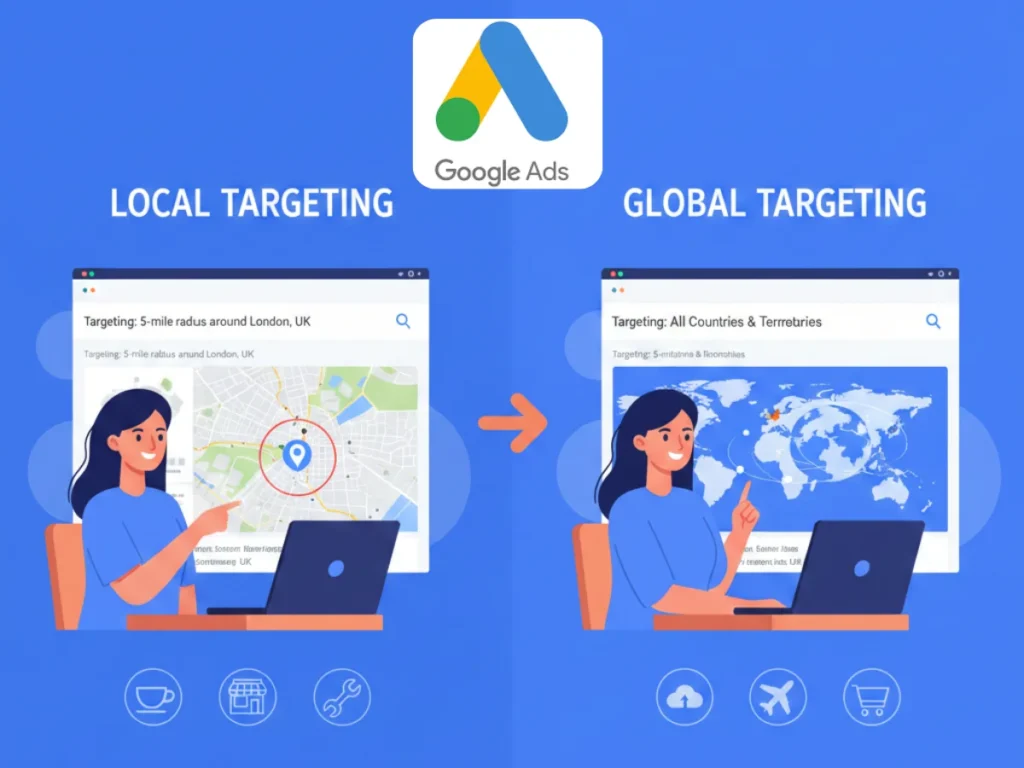
Local targeting, also known as geotargeting, allows you to target users based on their physical location. This means you can show your ads to people who are searching for keywords related to your business in a specific geographic area, such as a city, state, or country. Local targeting is ideal for businesses that have a physical presence, such as retail stores, restaurants, or service-based businesses.

What is Global Targeting in Google Ads?

Global targeting, on the other hand, allows you to reach a broader audience across the globe. This means your ads can be shown to anyone, anywhere in the world, as long as they’re searching for keywords related to your business. Global targeting is suitable for businesses that operate online, have a global customer base, or want to expand their reach beyond their local market.

Key Differences Between Local and Global Targeting

Here are some key differences to consider when deciding between local and global targeting:

Location: The most obvious difference is the location of your target audience. Local targeting focuses on a specific geographic area, while global targeting reaches a broader audience worldwide.

Language: Global targeting often requires translating your ads and website into multiple languages to cater to different regions.

Cultural differences: Global targeting requires an understanding of cultural differences and nuances to ensure your messaging resonates with your target audience.

Competition: Local targeting often has less competition, as you’re targeting a smaller geographic area. Global targeting, on the other hand, can be more competitive, with more businesses vying for attention.

How to Choose the Right Strategy

So, how do you choose between local and global targeting? Here are some questions to consider:

1. What are your business goals?: Are you looking to drive foot traffic to your physical store or attract online sales?

2. Who is your target audience?: Are they located in a specific geographic area or scattered across the globe?

3. What is your budget?: Local targeting can be more cost-effective, as you’re targeting a smaller audience. Global targeting, on the other hand, can be more expensive due to the broader reach.

4. What are your resources?: Do you have the resources to manage and optimize a global campaign, including translating ads and website content?

When to Choose Local Targeting

Local targeting is ideal for:

1. Brick-and-mortar businesses: If you have a physical store, local targeting can help drive foot traffic and attract local customers.

2. Service-based businesses: If you offer services, such as plumbing or consulting, local targeting can help you reach customers in your area.

3. Small businesses: Local targeting can be more cost-effective and manageable for small businesses with limited resources.

When to Choose Global Targeting

Global targeting is suitable for:

1. E-commerce businesses: If you operate an online store, global targeting can help you reach customers worldwide.

2. Software and digital products: If you offer software or digital products, global targeting can help you reach a broader audience.

3. Established businesses: If you have an established brand and resources, global targeting can help you expand your reach and attract new customers.

Conclusion

Choosing between local and global targeting in Google Ads depends on your business goals, target audience, budget, and resources. By understanding the differences between local and global targeting, you can create a targeted advertising strategy that drives real results for your business. Remember to consider your business goals, target audience, and resources when deciding between local and global targeting. With the right strategy, you can maximize your return on investment and grow your business.